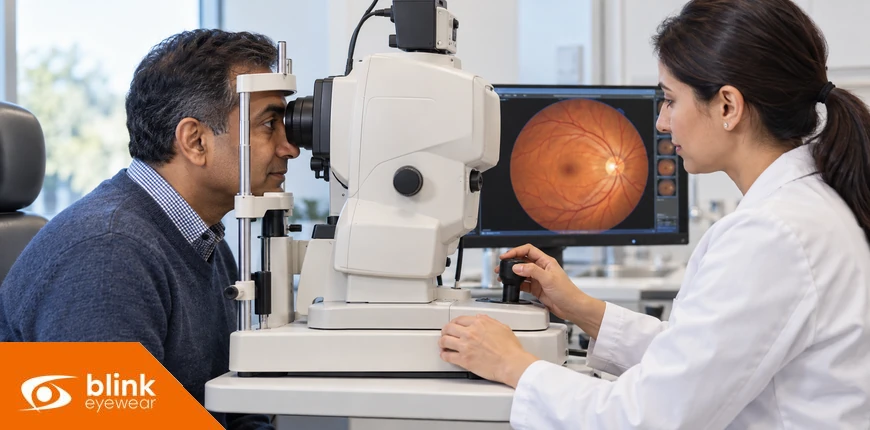
Diabetes can affect the eyes without causing noticeable symptoms, which is why regular eye care is an important part of managing the condition. A retinal exam allows an optometrist to look at the back of the eye, where changes related to diabetes can appear. Diabetic eye exams help monitor eye health over time and give you and your care team information to work with. Many people wait until their vision changes, but some concerns can develop before you notice anything is wrong. At Blink Eyewear, our optometrists can perform retinal assessments and explain the results in plain language. Knowing what a Calgary diabetic retinal exam involves can make it easier to book with confidence and stay on top of your eye health. Contact Blink Eyewear to learn more.
HOW DIABETES CAN AFFECT YOUR EYES
Diabetes affects blood sugar, and over time it can also affect the small blood vessels throughout the body, including those in the eyes.
The retina is the light-sensitive tissue at the back of the eye. It relies on a steady supply of blood, so it can be one of the places where diabetes-related changes appear.
Here is the challenge. Early changes often cause no symptoms. Vision may seem perfectly fine while an optometrist can still see something worth monitoring.
That is why diabetic eye exams are recommended even when you feel well and see clearly.
Eye concerns that may be associated with diabetes include:
- Retinal changes: Changes to the small blood vessels in the retina
- Swelling: Fluid affecting the central part of the retina
- Cataracts: Clouding of the eye's natural lens
- Glaucoma: Changes affecting the optic nerve
- Blurry vision: Fluctuations linked to changing blood sugar
- Floaters: New spots or shapes drifting through your vision
Having diabetes does not mean you will develop these concerns. Regular exams are how they are found early, if they occur.
WHY REGULAR RETINAL SCREENINGS MATTER
The main reason to attend regular retinal screenings is simple: you cannot always feel what is happening inside your eyes.
Many people expect a problem to announce itself with blurry vision or pain. With diabetes, that may not happen until a concern has progressed. A retinal exam gives your optometrist a direct look at the retina so changes can be noticed and followed over time.
Comparing results from one visit to the next is especially valuable. Small differences may be easier to identify when your optometrist has earlier records to look back on.
Regular retinal screenings can help:
- Monitor: Track changes in the retina over time
- Detect: Notice concerns before symptoms appear
- Inform: Give you and your care team useful information
- Guide: Help decide if follow-up or referral is appropriate
- Reassure: Confirm when your eyes are healthy
How often you should be seen depends on your health history and your care team's advice. Many people with diabetes are advised to have an eye exam every year, but your optometrist and doctor can recommend the right schedule for you.
Good eye care works best alongside your overall diabetes care. Share your exam results with your family doctor or diabetes care team, and let your optometrist know about any changes in your health or medications.
WHAT TO EXPECT DURING A DIABETIC RETINAL EXAM
A diabetic retinal exam is a comfortable, routine appointment for most people.
Your optometrist will ask about your diabetes, how long you have had it, your general health, medications, and any changes in your vision. This helps them tailor the exam to you.
Depending on your needs, the visit may include:
- History: Your health, medications, and previous eye care
- Vision: How clearly you see at different distances
- Retinal imaging: Photographs or scans of the back of the eye
- Dilation: Drops that widen the pupil, if your optometrist recommends them
- Eye pressure: A check related to glaucoma risk
- Discussion: Findings, next steps, and when to return
If your pupils are dilated, your vision may be blurry and light may feel bright for a while afterward. Ask when you book whether you should bring sunglasses or arrange a ride.
Bring a list of your medications and, if you have them, recent blood sugar readings or test results. Wear your glasses or contact lenses to the appointment.
Contact your optometrist or seek prompt care if you notice sudden vision changes, new floaters, flashes of light, or a shadow in your vision. Do not wait for your next scheduled exam.
At Blink Eyewear, our optometrists provide diabetic eye care at our Crowfoot, West Springs, and Creekside locations, with a focus on clear explanations and comfortable visits.
If you have diabetes and it has been a while since your last eye exam, now is a good time to book. Contact Blink Eyewear to learn more about a Calgary diabetic retinal exam and find a time that fits your schedule.