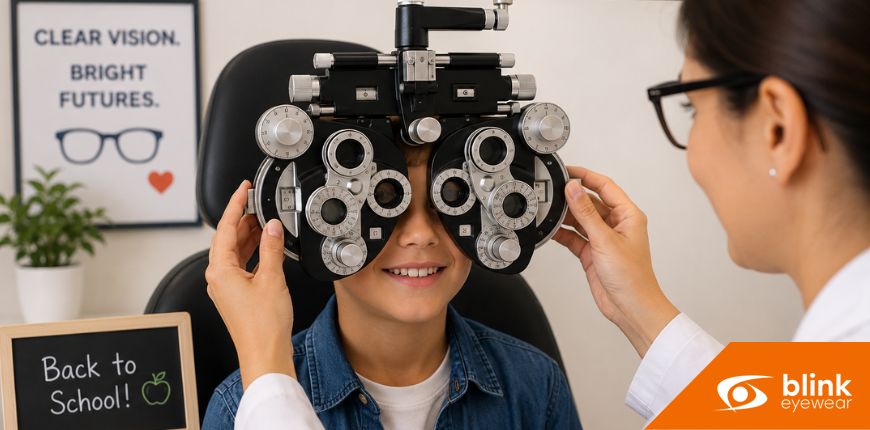
As summer begins to wind down, many families start preparing for the return to school. New backpacks, school supplies, clothing, and schedules often top the priority list. However, one important item is frequently overlooked: a comprehensive eye exam. Good vision plays a critical role in a child's ability to learn, participate in the classroom, and perform daily activities both at school and at home.
Many parents assume that if their child is not complaining about their eyesight, everything must be fine. In reality, children often do not realize they have a vision problem because they have no point of comparison. They may think everyone sees the way they do. This can allow vision issues to go unnoticed for months or even years, potentially affecting academic performance, confidence, and overall development. Early detection can make a significant difference.
WHY VISION PLAYS A MAJOR ROLE IN LEARNING
Vision is involved in nearly every aspect of a child's education. Reading textbooks, viewing classroom presentations, completing assignments, using computers, and participating in group activities all rely heavily on clear and comfortable vision.
Studies have shown that a significant portion of classroom learning is visual. When children struggle to see clearly, they may experience challenges that can sometimes be mistaken for learning difficulties or attention issues.
Some common signs of vision problems include:
- Squinting when reading or viewing distant objects
- Sitting unusually close to screens
- Frequent headaches
- Eye rubbing
- Holding books very close
- Difficulty concentrating
- Skipping lines while reading
- Complaints of blurry vision
- Reduced interest in schoolwork
Because these symptoms can develop gradually, they are not always obvious to parents or teachers. A child may simply adapt to reduced vision without mentioning it.
Comprehensive eye exams evaluate much more than whether a child needs glasses. Optometrists assess eye health, focusing ability, eye coordination, depth perception, colour vision, and other visual skills that contribute to successful learning.
Even children who pass school vision screenings can still have undetected visual issues. Screenings are valuable tools, but they do not replace a complete eye examination performed by an eye care professional.
Detecting concerns early allows families to address problems before they begin impacting classroom performance. In many cases, simple interventions such as glasses or vision management strategies can make a significant difference in a child's comfort and confidence.
THE BENEFITS OF BOOKING DURING SUMMER
Summer offers several advantages when it comes to scheduling children's eye exams. Perhaps the biggest benefit is flexibility. During the school year, families often juggle homework, extracurricular activities, sports, and busy weekday schedules. Summer provides greater freedom to arrange appointments without disrupting classroom learning.
Booking early also reduces the risk of last-minute scheduling challenges. As September approaches, many eye care clinics experience increased demand from families preparing for the new school year. Scheduling an exam during the summer often provides greater appointment availability and more convenient times.
Additional benefits of summer eye exams include:
- More flexible scheduling options
- Time to order glasses if needed
- Opportunity to adjust to a new prescription
- Reduced stress before school starts
- Early detection of vision concerns
- Better preparation for classroom learning
If a child requires glasses, summer allows time for proper fitting, adjustments, and adaptation before classes begin. Some children need a short adjustment period when wearing their first pair of glasses or when transitioning to a new prescription.
Parents also gain peace of mind knowing that any identified concerns can be addressed before the demands of the school year begin. Rather than discovering a vision issue midway through the semester, families can start the year knowing their child is visually prepared.
Summer appointments can be especially beneficial for children who are entering new educational stages, such as kindergarten, junior high, high school, or post-secondary education. These transitions often involve increased visual demands that make healthy vision even more important.
WHAT TO EXPECT DURING A CHILDREN'S EYE EXAM
Many parents are surprised by how comprehensive modern children's eye exams can be. The examination process is designed to be comfortable, educational, and appropriate for the child's age and developmental stage.
The exam typically begins with a discussion about medical history, visual concerns, family eye health history, and any symptoms the child may be experiencing. From there, the optometrist performs a series of assessments to evaluate both vision and eye health.
A comprehensive children's eye exam may include:
- Visual acuity testing
- Prescription assessment
- Eye coordination evaluation
- Focusing ability assessment
- Depth perception testing
- Colour vision testing
- Eye movement evaluation
- Retinal health examination
- Overall eye health assessment
These tests help identify a wide range of conditions that may affect learning and visual comfort.
Some children require glasses, while others may benefit from monitoring or additional management strategies. Many children leave their exam with confirmation that their eyes are healthy and functioning normally, providing reassurance for both parents and students.
Regular eye exams remain important throughout childhood because vision can change as children grow. A child who did not require glasses one year may need vision correction the following year. Ongoing monitoring helps ensure any changes are identified promptly.
Starting the school year with clear vision can support academic success, classroom participation, reading development, and overall confidence. Children who see clearly are often better positioned to engage fully in their learning environment and enjoy the educational opportunities ahead.
Back-to-school preparation involves much more than purchasing supplies and organizing schedules. A comprehensive eye exam is one of the most valuable investments parents can make in their child's academic success and long-term eye health. By scheduling an appointment during the summer, families gain the opportunity to identify potential vision concerns early, address any necessary corrections, and ensure children begin the school year ready to learn. Taking a proactive approach today can help set the stage for a successful and productive year in the classroom.
If your child has not had a comprehensive eye exam recently, summer is the ideal time to schedule an appointment and help them start the school year seeing clearly and confidently.