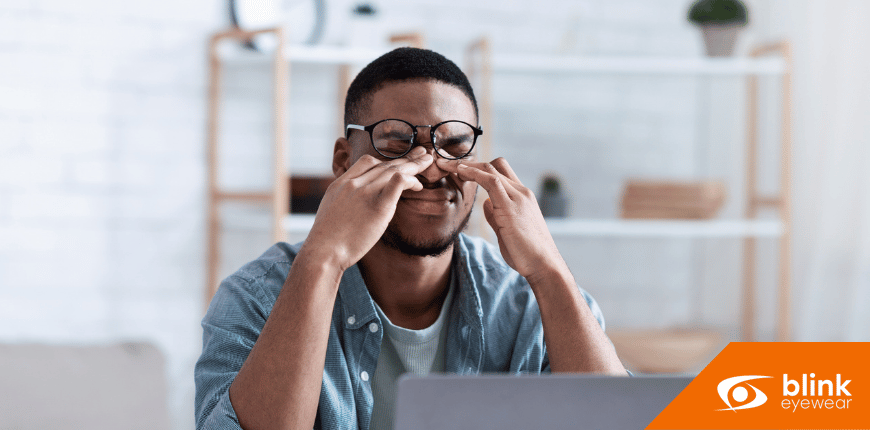
Between work, school, and entertainment, many of us spend hours a day in front of screens, so it is no surprise that blue light glasses have become so popular. Marketing claims can make them sound like a cure for tired eyes, headaches, and poor sleep, but the reality is more nuanced. Understanding what blue light is, what these lenses are designed to do, and what the research does and does not show can help you decide whether they make sense for you.
At Blink Eyewear, we believe the best choice is an informed one. Our team can explain the benefits of blue light glasses, discuss who may find them helpful, and talk about other steps that can make screen time more comfortable. If your eyes feel tired at the end of the day, an eye exam is also a good way to find out what may be contributing.
WHAT BLUE LIGHT IS AND WHAT THE LENSES DO
Before deciding whether blue light glasses are worth it, it helps to understand what blue light actually is. Visible light is made up of a range of colours, and blue light sits at the shorter, higher-energy end of that range. It is not something new or unusual. The largest source of blue light is the sun, and we are exposed to it every time we step outside. Blue light is also emitted by screens, LED lighting, phones, tablets, and computers, although the amount from digital devices is much smaller than what we receive from natural daylight.
Blue light is not all bad. Exposure to natural light during the day plays a role in regulating our body clock, which influences alertness and sleep. This is one reason spending time outdoors in daylight is encouraged for people of all ages.
Blue light glasses are designed to filter or reduce a portion of the blue light that reaches your eyes. Some use a coating on the lens surface that reflects part of the blue light, while others use a tint or lens material that absorbs it. Many versions look clear or have only a faint tint, which is why they are popular for people who want to wear them all day. Some filter more than others, and the appearance can vary, so a slight yellow or blue reflection on the lens is common.
You can find them in a few different forms. Some people buy non-prescription pairs designed for computer use, while others add blue light filtering as an option on their regular prescription lenses. Having it as part of your prescription lenses means you do not need to carry a separate pair or switch glasses throughout the day.
Blue light is found in:
- Sunlight: The largest source of blue light we are exposed to
- Phones and tablets: Close-range screens we use throughout the day
- Computers: Often used for hours at a time
- LED lighting: Common in homes, offices, and stores
- Televisions: Typically viewed from a greater distance
It is also worth separating blue light from the broader issue of screen use. Looking at a screen for a long time changes how we use our eyes. We tend to blink less often, we hold a fixed focus at a close distance, and we may sit with glare, poor lighting, or an awkward screen position. These habits can all contribute to tired, dry, or uncomfortable eyes, regardless of the colour of light being emitted.
That distinction matters. When people say screens make their eyes feel tired, the cause may be related to focusing effort, dryness, lighting, posture, or an uncorrected prescription, rather than blue light alone. Understanding what is actually behind the discomfort is the first step toward finding something that helps.
WHAT BLUE LIGHT GLASSES DO AND DON'T DO
This is where the conversation becomes more nuanced. Marketing for blue light glasses often suggests they can reduce digital eye strain, prevent eye damage, and improve sleep. The research behind these claims is not as clear as the marketing might suggest.
Digital eye strain is a group of symptoms that can include tired eyes, dryness, blurry vision, and headaches after extended screen use. Studies looking at whether blue light filtering lenses reduce these symptoms have generally not shown a clear, consistent benefit compared with regular lenses. Some people feel more comfortable wearing them, which may be due to a number of factors, but the evidence does not strongly support the idea that blue light is the main cause of digital eye strain.
The same caution applies to eye damage. There is currently no clear evidence that the amount of blue light from everyday screen use causes damage to healthy eyes. Sunlight exposure is a much bigger source of blue light, and protecting your eyes outdoors with good sunglasses is a more practical step.
Sleep is a more complicated topic. Exposure to bright light in the evening, including light from screens, can affect the body clock for some people. Some people find that reducing screen use before bed or using night modes on their devices helps. Whether blue light glasses help with sleep specifically is still being studied, and results have been mixed.
What blue light glasses may do:
- Filter some blue light: Reduces a portion of the light reaching your eyes
- Reduce glare for some: Some wearers find screens feel more comfortable
- Add a coating option: Can be included in prescription lenses
- Fit your routine: Easy to wear throughout the day
What they are not designed to do:
- Correct vision: A prescription does that, not the filter itself
- Cure eye strain: Strain can have several different causes
- Replace eye exams: Symptoms still need to be assessed
- Guarantee better sleep: Habits and environment also matter
None of this means blue light glasses are pointless. Many people who wear them say they like the way they feel, and there is little downside for most people beyond the cost of the lenses. The key is to have realistic expectations. They are one possible tool, not a cure-all, and they work best alongside good screen habits and regular eye care.
If you have been told that blue light glasses will solve your symptoms, it is worth asking what the evidence shows and what else might be going on. A good eye care provider will give you an honest answer, not a sales pitch.
WHO THEY'RE FOR AND WHAT ELSE HELPS
So, who might benefit from blue light glasses? The honest answer is that it depends on you. Some people find they prefer wearing them during long computer sessions, while others notice no difference. If you spend many hours at a screen and want to try a lens option that filters some blue light, it is a reasonable choice to explore, as long as you understand what to expect.
The people who tend to feel most comfortable with them are those who spend long hours at a computer, work under bright artificial lighting, or are sensitive to glare. Some people also like the idea of a lens that is already built into their everyday glasses. If you fall into this group, adding a blue light filter to your prescription lenses can be a convenient option.
However, there are several things that often make a bigger difference to screen comfort than the colour of light. Starting with the basics can help, whether or not you choose blue light glasses.
Steps that can make screen time more comfortable:
- Take regular breaks: Look away from the screen at something in the distance
- Blink often: Screen use can reduce how often we blink
- Adjust your setup: Position your screen at a comfortable distance and angle
- Manage lighting: Reduce glare and avoid very bright or very dim rooms
- Update your prescription: Even small changes can cause strain
- Ask about dryness: Dry eyes are a common cause of screen discomfort
One popular guideline is to take a short break every 20 minutes or so and look at something in the distance for about 20 seconds. It is simple, free, and helps your focusing muscles relax.
If your eyes feel tired, dry, or uncomfortable after screen use, it is worth booking an eye exam. An optometrist can check whether your prescription is up to date, assess how your eyes focus and work together, and look for dryness or other issues that may be contributing. Sometimes a small prescription change or a lens designed for your working distance makes a bigger difference than a coating.
Children and teens are spending more time on screens than ever, and many parents wonder whether blue light glasses are necessary for them. As with adults, good habits are an important place to start, including regular breaks, time outdoors, and healthy screen limits. If your child complains of headaches or tired eyes, an eye exam can help determine whether there is an underlying cause.
At Blink Eyewear, we are happy to talk through your options without pressure. If you would like to try blue light filtering, we can explain how it works, what it can be added to, and how it fits with your prescription. If you would prefer to focus on other solutions, we can help with that too.
If screens are a big part of your day and your eyes feel it, visit Blink Eyewear at our Crowfoot, West Springs, or Creekside location for an eye exam and a personalized conversation. We can help you decide whether blue light glasses are a good fit and find benefits of blue light glasses that make sense for your needs.